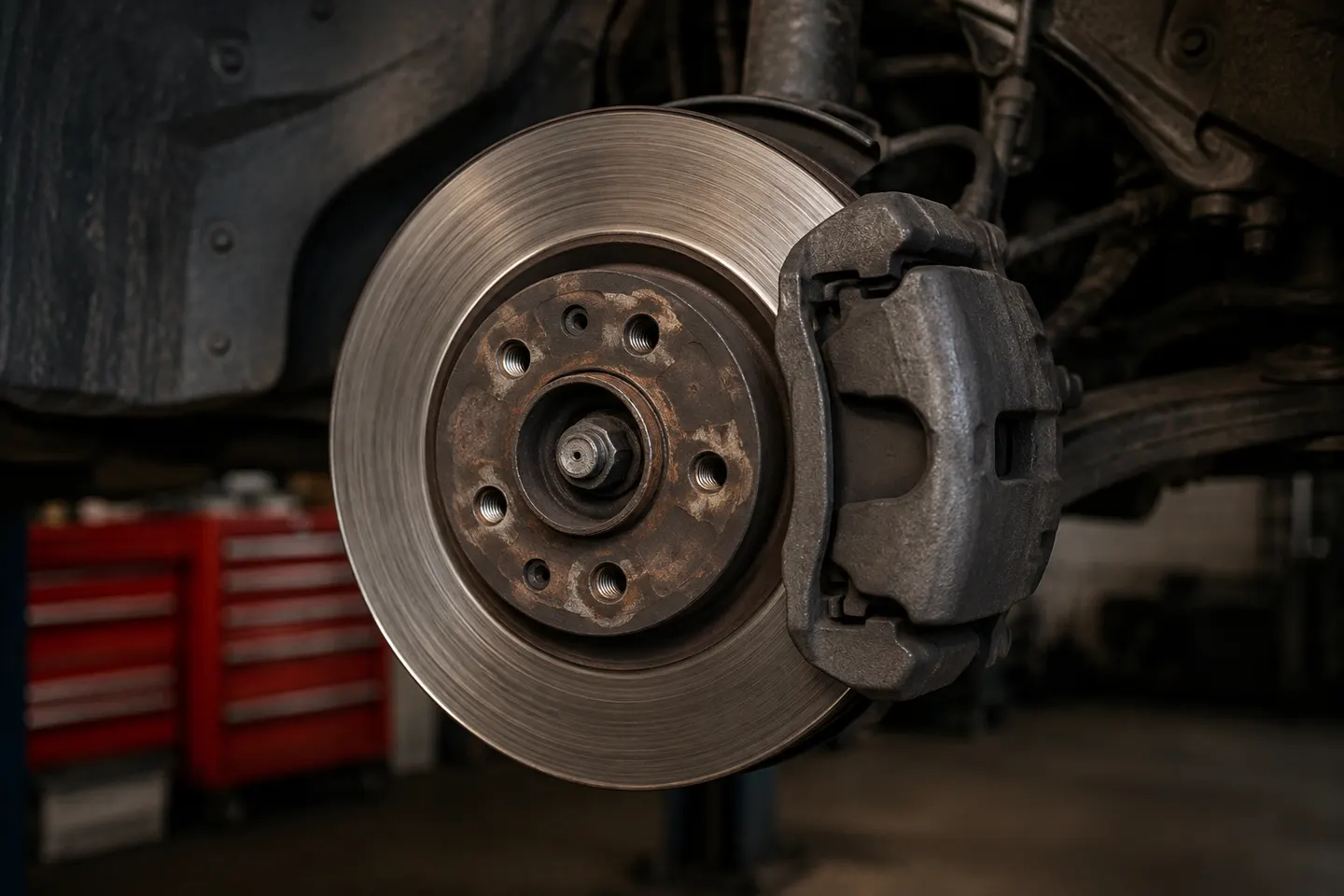
- A brake complaint should describe stopping performance as well as noise.
- Friction wear, hydraulic faults, mechanical hardware, and control systems require different repairs.
- A soft or sinking pedal needs separate attention from a squeal.
- Two brake estimates can differ because they cover different axles, parts, and tests.
- Ask directly whether the needed brake service is currently available.
How do brake symptoms change the inspection?
Several symptoms can occur together, but each points toward a different part of the braking system that must be checked.
| What the driver notices | What it can point toward | What separates the possibilities |
|---|---|---|
| Noise with normal pedal response | Friction material, rotor or drum surface, hardware, or contact | Visual inspection and condition measurements |
| Pedal feels soft or sinks | Hydraulic leak, air, pressure loss, or adjustment concern | Leak inspection and hydraulic-system testing |
| Vehicle pulls or feels unstable while braking | Uneven braking, tire, suspension, or hydraulic issue | Side-to-side brake and chassis comparison |
| Warning appears without obvious noise | Fluid level, wear sensing, electronic control, or system fault | Identify the message and test the relevant circuit or component |
How does a complete brake evaluation progress?
The process moves from the driver’s stopping complaint to friction, hydraulic, mechanical, and electronic checks that fit the symptom.
Record the original complaint
Explain when the change began, whether it follows recent work, what the pedal does, where vibration is felt, and whether a warning, pull, odor, or fluid spot appeared. The first question is whether the car still stops predictably. A noise-only complaint and a sinking pedal should never enter the same urgency category.
Inspect the connected parts
Pads or shoes, rotors or drums, calipers or wheel cylinders, hoses, lines, hardware, fluid evidence, tires, and visible control-system wiring can be reviewed. A pull that appears only during braking should be described separately from a constant alignment pull. That distinction keeps tire and suspension conditions in the correct branch.
Test the suspected system
Pedal behavior, hydraulic integrity, friction measurements, component movement, and control-system data may be checked without using a hard road stop to create the symptom. Hydraulic pressure, friction condition, component movement, and electronic data each address different failure modes. The test sequence should follow the strongest safety symptom first.
Compare repair paths
Friction replacement, rotor or drum work, hydraulic repair, caliper or hardware service, parking-brake correction, and electronic diagnosis solve different findings. A complete repair may cross friction and hydraulic systems, but each operation needs evidence. Optional fluid or hardware service should remain visible as its own line item.
Verify the result
The final check should confirm a stable pedal, balanced and predictable stopping, no leakage or warnings, and correction of the original noise, pull, or vibration. Hydraulic work calls for a stable pedal-hold check, friction work for controlled stops and the applicable bedding procedure, and electronic work for a system-status check. Any remaining vibration should be traced instead of described as normal.
What symptoms can lead to brake repair?
Grinding, squeal, vibration, pulling, longer stopping response, a soft pedal, a sinking pedal, fluid loss, burning odor, or brake warning can all justify prompt inspection. A burning odor and heat at one wheel can indicate drag even before the pedal changes. Fluid loss or a new dashboard warning shifts the concern toward hydraulic integrity.
How is the cause of the problem confirmed?
Diagnosis should connect the complaint to measured wear, visible damage, hydraulic behavior, component movement, or control information before the repair scope is chosen. Measurements should be taken where the vehicle maker specifies and paired with functional checks. A worn appearance alone does not explain a hydraulic or control complaint.
What other faults can look similar?
Tire defects, wheel bearings, suspension looseness, road debris, drivetrain movement, and normal control-system activation under certain conditions can imitate part of a brake complaint. A tire belt problem can pull during deceleration, while suspension looseness can change wheel direction under load. The brake inspection should recognize these chassis alternatives.
What should the repair estimate explain?
A clear estimate identifies the axle or circuit, exact friction and hydraulic parts, rotor or drum work, hardware, fluid service, access, and the checks performed after repair. The quote should distinguish damage at one wheel from axle-level paired work and explain why any fluid or electronic procedure applies. That makes the reason for each line item clear without turning one symptom into a general brake package.
When does a simple repair approach stop making sense?
Replacing friction parts cannot seal a leak, restore a failing hydraulic component, or correct a tire or suspension problem. A warning reset cannot repair the condition that activated it. A pad-only or noise-treatment approach fails when pedal behavior, leakage, drag, unstable direction, or electronic faults are part of the original complaint.
When should the vehicle stop being driven?
Stop driving if braking response is reduced or unpredictable, the pedal sinks, fluid is leaking, the vehicle pulls severely, or grinding is joined by poor stopping. Move to a safe location without testing the brakes further and arrange recovery. Do not open hydraulic components or work under a vehicle without proper support and training.
 Illustrative image
Frequently asked questions
What does a brake inspection need to include?
The scope depends on the complaint, but it may cover friction material, rotors or drums, calipers or wheel cylinders, hoses, lines, fluid condition, hardware, parking-brake parts, and electronic information. Ask which findings explain the symptom and which are separate maintenance items.
Why does my brake pedal feel different from yesterday?
A sudden change can involve hydraulic pressure, air, a leak, component movement, or another serious condition. Do not assume it will improve with driving. Arrange inspection, and use recovery if stopping response is uncertain. A firm result after pumping does not make the vehicle safe to drive.
Can a dashboard brake warning wait if the car still stops?
The message needs to be identified using the owner’s manual and relevant diagnosis. It may relate to fluid level, parking-brake state, wear sensing, or a control fault. Normal stopping during one trip does not prove the system is safe. Identify the exact symbol before deciding urgency.
Why are brake repair quotes so different?
Quotes may cover different axles, friction parts, rotor or drum work, hardware, calipers, fluid operations, or diagnostic time. Compare the documented findings and included work line by line before deciding that the lower or higher total represents the same repair.
Should brakes be repaired in axle pairs?
Friction service is commonly planned by axle so braking remains balanced, but the exact decision depends on vehicle design, component condition, and the confirmed fault. Hydraulic or electronic parts may follow a different replacement strategy. Ask for the reason behind the proposed scope.
Key takeaways
- Stopping behavior determines urgency and directs the brake inspection.
- Friction, hydraulic, mechanical, and electronic faults need distinct evidence.
- A useful estimate names the axle, components, and verification work.
- Current service details require direct confirmation.
Sources and vehicle references
- Firestone: common brake problems
- Midas: soft and spongy brakes
- AAA: signs that brakes need inspection
- AAA: guide to auto repair
Use the owner’s manual and vehicle-specific service information for your exact model, engine and equipment.
Confirm before making plans.
Current Collins Repair operations and this service have not been independently verified. Use the published phone or email to ask whether the business is operating, whether the service is available for your vehicle and where the vehicle should arrive.