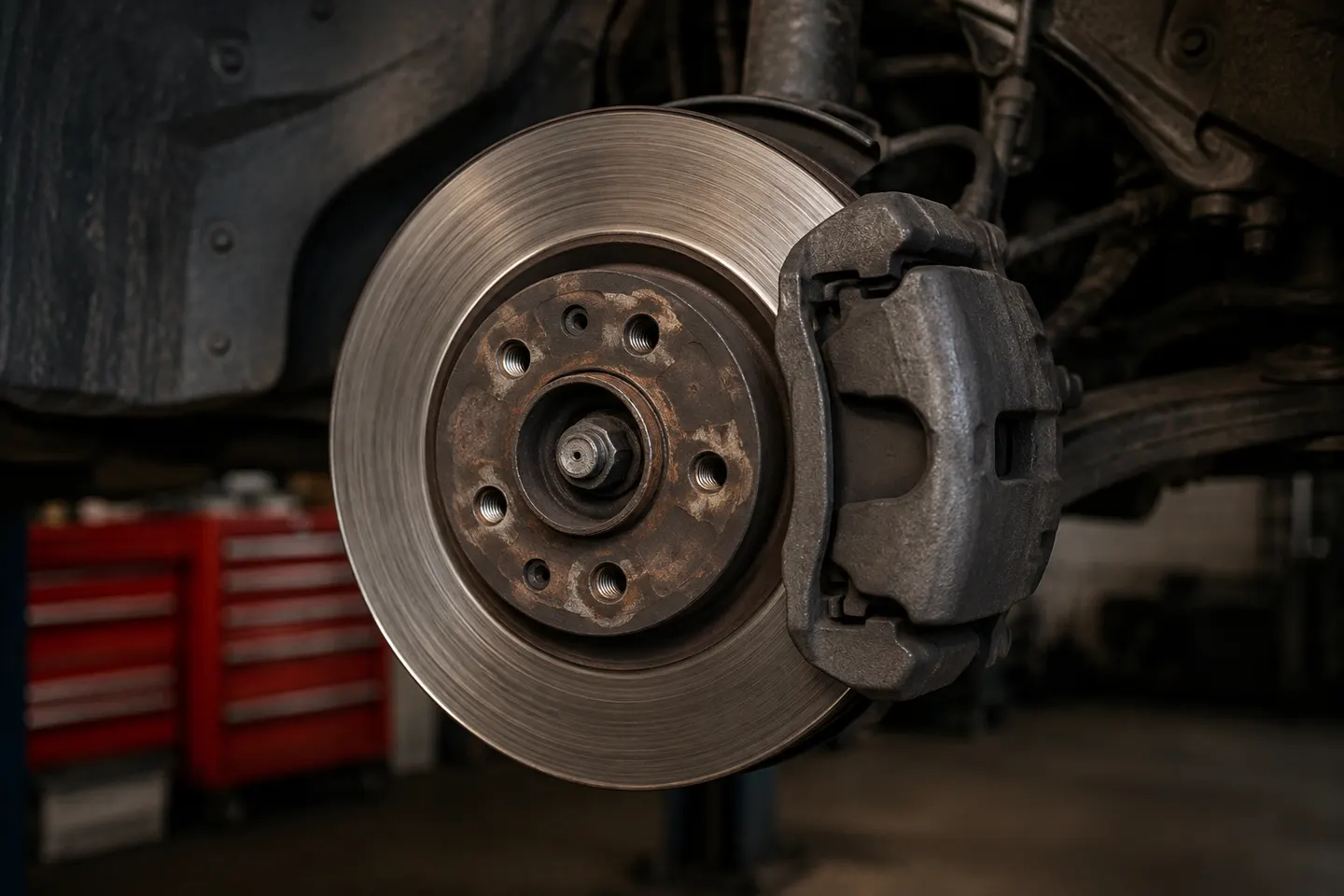
- Brake noise does not establish pad thickness or the condition of the complete system.
- Pads, rotors, calipers, slides, and hardware should be evaluated together on the affected axle.
- Grinding or changed stopping performance raises the urgency of inspection.
- An estimate should identify the axle, friction parts, hardware, and post-repair checks.
- Current brake pad service availability must be confirmed directly.
What can common brake pad symptoms mean?
The sound, pedal behavior, and stopping response help distinguish ordinary friction wear from a wider brake concern.
| What the driver notices | What it can point toward | What separates the possibilities |
|---|---|---|
| High-pitched noise during braking | Wear indicator, friction condition, debris, or hardware | Pad inspection with rotor and hardware assessment |
| Grinding while the pedal is applied | Severe friction wear or contact from another brake part | Prompt inspection of pads, rotors, calipers, and affected surfaces |
| Steering or pedal vibration while slowing | Rotor variation, wheel condition, looseness, or another rotating fault | Brake measurements and connected wheel or suspension checks |
| Vehicle pulls during braking | Uneven friction, caliper action, tire, hydraulic, or suspension issue | Side-to-side comparison and complete brake inspection |
How is brake pad replacement scoped?
A responsible evaluation starts with the stopping complaint, measures the friction system, and checks why wear differs before parts are approved.
Record the original complaint
Describe the sound, pedal feel, vibration, pull, warning message, and whether the concern appears cold, after repeated stops, in reverse, or throughout a trip. A sound that occurs only after warm-up can point toward heat and movement, while a first-stop sound may involve a different surface condition. Both need the stopping response recorded.
Inspect the connected parts
Pads, rotors, calipers, slides, hoses, visible hardware, leaks, and tire or wheel conditions at the affected area can be compared side to side. Inner and outer pads should be compared because hidden uneven wear can expose a slide or caliper problem that is not visible through the wheel.
Test the suspected system
Measurements and functional checks can establish remaining friction material, rotor condition, caliper movement, hydraulic response, and whether another component explains the complaint. The evidence should also explain why wear differs from side to side, if it does. Slide movement, hydraulic release, hardware position, and rotor runout answer that question more directly than a photograph of one pad.
Compare repair paths
Pads alone, pads with rotor work, caliper or hardware correction, or a broader hydraulic repair are different scopes. Each should follow documented findings. If one side wore faster, hardware and hydraulic causes belong in the quote. New pads should not be expected to correct a sticking component by themselves.
Verify the result
The completed brakes should be checked for consistent pedal response, controlled stopping, absence of leakage, correct hardware operation, and resolution of the original noise or vibration. Verification should include the bedding procedure specified for the installed parts and a check that the pedal and stopping direction remain stable.
What symptoms can lead to brake pad replacement?
Squeal, scraping, grinding, longer stopping response, vibration, a pull, or a pad-wear message can lead to inspection of the friction material. A wear message can use a sensor that does not represent every wheel, so physical inspection remains necessary. Grinding raises concern for surface damage beyond ordinary pad wear.
How is the cause of the problem confirmed?
Pad condition should be observed on the relevant wheels and interpreted with rotor surfaces, caliper movement, hardware, and any uneven wear pattern. The inspection should identify the affected axle and compare both sides. Consistent findings support friction service, while asymmetry calls for a cause before replacement.
What other faults can look similar?
A stone shield, wheel bearing, tire fault, suspension looseness, parking-brake hardware, rotor condition, or hydraulic problem can create noise or behavior that resembles pad wear. A bent shield may scrape without pedal pressure, and a bearing can hum or grind through turns. Timing and contact marks keep these noises separate from friction wear.
What should the repair estimate explain?
The scope should identify the axle, pads, rotor replacement or service, hardware, caliper or slide work, fluid operations if justified, and the bedding or verification instructions. Ask whether rotors will be measured, reused, serviced, or replaced, which hardware is included, and how a caliper or hose finding would change authorization.
When does a simple repair approach stop making sense?
New pads cannot restore a badly damaged rotor, free a seized caliper, seal a hydraulic leak, or correct a tire or suspension fault. Uneven wear requires a cause, not only fresh friction material. Pads alone stop being reasonable when the mating surface is damaged, the caliper does not move freely, fluid is leaking, or another wheel fault creates the complaint.
When should the vehicle stop being driven?
Do not continue driving to test grinding, a sinking pedal, fluid leakage, severe pull, or reduced stopping ability. Arrange recovery when the brakes do not respond predictably. Never work beneath an unsupported vehicle or inhale brake dust. A road test should only occur after the system is confirmed safe to operate.
 Illustrative image
Frequently asked questions
Do squealing brakes always need new pads?
No. Noise can come from a wear indicator, hardware, debris, surface condition, or another component. Pad thickness and the surrounding brake system need inspection before replacement is selected. Any change in stopping performance should be treated separately from sound. Inspection should record remaining lining and rotor condition on both sides.
Can pads be replaced without replacing rotors?
Sometimes, depending on rotor condition, measurements, surface damage, vehicle requirements, and the original complaint. The estimate should explain why the rotor can remain, be serviced, or needs replacement instead of treating every axle the same. Measurements should support the selected rotor plan.
Why did one set of pads wear faster than the other?
Uneven wear can point to caliper or slide movement, hardware, hydraulic behavior, contamination, alignment of parts, or driving conditions. The cause should be inspected before new pads are expected to wear evenly. Comparing inner and outer pads on both sides helps locate restricted movement.
Does grinding mean the caliper is damaged?
Grinding can follow severe pad wear, but it does not prove caliper damage. The friction surfaces, caliper operation, hardware, and rotor or drum area should be inspected promptly to define the actual repair. Heat and wear patterns help show whether the caliper still moves correctly.
What should I ask after brake pad replacement?
Ask what was measured, which axle and parts were serviced, how caliper and hardware operation were checked, what bedding instructions apply, and whether any separate brake concern remains. Report any persistent warning, pull, vibration, or unusual pedal immediately. The post-service pedal should feel stable before release.
Key takeaways
- Brake pad decisions require inspection of the complete friction assembly.
- Noise and pad wear are related clues, not interchangeable diagnoses.
- Uneven wear or damaged rotors can change the repair beyond pads.
- Confirm current availability before arranging service.
Sources and vehicle references
- AAA: signs that brakes need inspection
- Firestone: common brake problems
- Midas: soft and spongy brakes
- AAA: guide to auto repair
Use the owner’s manual and vehicle-specific service information for your exact model, engine and equipment.
Confirm before making plans.
Current Collins Repair operations and this service have not been independently verified. Use the published phone or email to ask whether the business is operating, whether the service is available for your vehicle and where the vehicle should arrive.