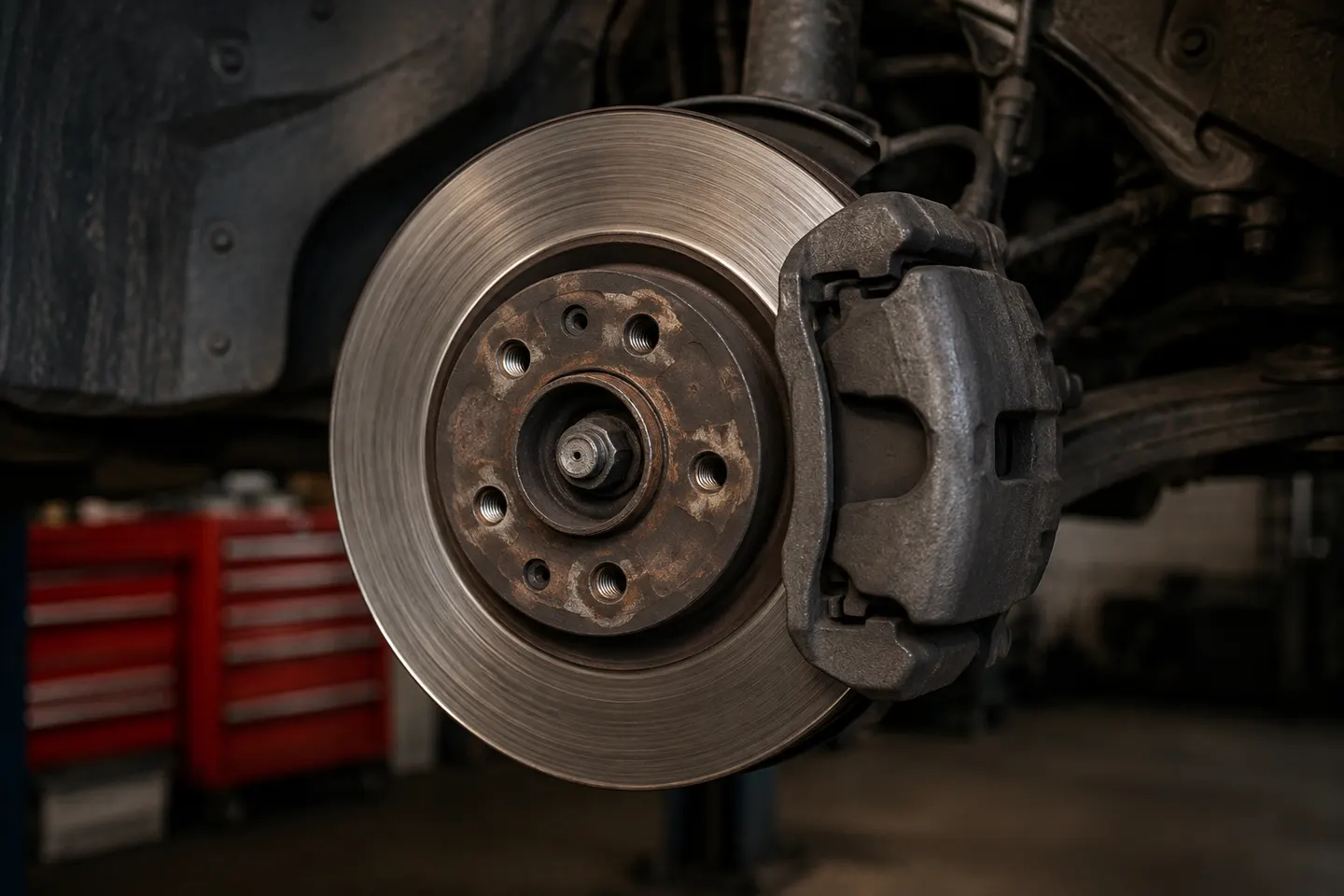
- Poor holding, a stuck brake, excess control travel, a warning, or failure to release may arise in cables, actuators, rear brakes, adjustment, or electronics. The behavior alone cannot distinguish adjustment from component repair.
- Evaluation compares the owner's history with control travel, cables or actuators, rear friction parts, hardware, adjustment, warning data, corrosion, and service-mode requirements.
- Testing may need to separate rear brake wear, seized calipers, frozen cables, incorrect adjustment, an electronic control fault, transmission park behavior, and surface conditions.
- The parking-brake quote should identify the affected wheels, failed holding or release component, adjustment, setup needs, and verification method.
- Current availability for parking brake repair should be confirmed directly before planning a visit.
What can parking brake repair include?
Compare control movement, cables or actuators, rear brake condition, electrical checks, repair scope, and separate hold and release tests.
| Stage | Useful evidence | What it does not prove |
|---|---|---|
| Owner report | Operating conditions and recent work related to poor holding, a stuck brake, excessive lever or pedal travel, a warning, or failure to release. | The report does not prove that a simple cable adjustment will correct the condition. |
| Initial inspection | The driver control, cables or electronic actuators, rear brake hardware, attachments, friction parts, wiring, warning status, and visible corrosion. | A moving lever or actuator does not establish correct shoe or caliper action, cable travel, adjustment, or full rear-wheel release. |
| Focused tests | Measurements selected to separate rear brake wear, seized calipers, frozen cables, incorrect adjustment, an electronic control fault, transmission park behavior, and surface conditions. | Holding and release must be tested with the specified procedure because adjustment, rear brake condition, controls, and voltage can affect the same result. |
| Repair decision | The affected wheel and confirmed adjustment, cable, hardware, friction, caliper, actuator, wiring, or control repair. | The estimate should separate parking-brake work from unrelated base-brake repair and list service mode or programming when required. |
| Result check | Smooth application, secure holding by the specified procedure, complete release, free rear-wheel rotation, and normal warning status. | Extinguishing an electronic warning does not prove that both rear wheels hold correctly and release without drag. |
How is a parking brake fault evaluated?
Identify the mechanical or electronic design, then test holding and release while checking the related rear brake components.
Define the complaint
Describe whether the brake fails to hold, refuses to release, or behaves differently at one rear wheel. Record the control type, slope, weather, storage time, warning messages, and recent rear-brake work. Do not force a seized mechanism or rely on a brake with uncertain holding ability.
Inspect the connected system
Identify the design, then inspect the driver control, cables and equalizer or electronic actuators, wiring, attachments, and visible corrosion using safe vehicle support. Examine the related rear service-brake friction parts and hardware because some systems share components or adjustment.
Run focused tests
Test application, holding, and full release as separate functions. Compare cable travel or actuator data with rear-friction condition, control input, and supply voltage, following the required service mode before components are moved.
Set the repair boundary
Itemize adjustment, cable and hardware work, rear shoe or caliper repair, electronic actuator service, wiring, service mode, and programming according to the confirmed fault. Put related service-brake correction on its own approval line when it extends beyond the parking-brake mechanism.
Verify the original concern
Use the specified safe procedure to confirm smooth application, secure holding, complete release, free rear-wheel rotation, and normal warning status. Record the work at each wheel and any adjustment, service-mode, or electronic setup completed.
Which symptoms justify asking about parking brake repair?
Relevant symptoms include vehicle movement with the brake applied, excessive lever or pedal travel, a dragging rear wheel, failure to release, or an electronic warning. Note whether the problem affects holding, release, or both and how weather, storage, slope, or recent rear-brake work changes it. Do not rely on a weak brake for parking or drive with a hot, smoking, or locked wheel.
How are parking-brake holding and release faults separated?
First identify whether the design uses cables, drum-style shoes, caliper mechanisms, electronic actuators, or a combination. Inspection then follows the force from the driver control to each rear wheel while checking base-brake condition, adjustment, supply voltage, command data, and service-mode requirements. Holding and release need separate results. Adjustment is appropriate only after broken, seized, worn, or electronically failed parts have been excluded.
What can mimic a parking brake cable or actuator problem?
Rear service brakes share friction parts or operating space with some parking-brake designs. A seized caliper, worn shoe or pad, damaged hardware, low voltage, wiring fault, or incorrect prior adjustment can resemble a cable problem. Follow movement from the control to each rear wheel and compare mechanical travel with electronic command where applicable. Separate holding from release to locate the fault.
What should the parking brake repair estimate explain?
The scope should identify the affected wheels and the confirmed cable, actuator, wiring, friction, hardware, caliper, or adjustment work. It must state any service-mode or programming procedure and the method used to verify both holding and release. Base-brake repair outside the parking mechanism belongs on a separate approval line.
When is parking brake adjustment insufficient?
Adjustment cannot restore a broken, stretched, corroded, frozen, or electronically failed component. It should not hide worn rear friction material, seized service brakes, damaged hardware, or a control fault. The repairer should identify the parking-brake design, inspect the base rear brakes, and follow service-mode requirements before deciding whether a cable, actuator, caliper, shoe, wiring repair, or adjustment addresses the complaint.
When should the vehicle stop being driven?
Do not rely on a parking brake that will not hold. Park on a safe level area when possible, follow the owner manual for securing the vehicle, and use wheel restraint if appropriate. Do not touch a hot dragging brake or work beneath an unsupported vehicle.
 Illustrative image
Frequently asked questions
What can make a parking brake hold poorly or stay applied?
Poor holding or drag can begin in the rear service brakes, cables, actuators, control input, electrical supply, corrosion, or an incorrect setting. Test application, holding, and complete release separately, then compare both rear wheels. The failed mechanical part, circuit, or adjustment should be identified before work is chosen.
Can adjustment or maintenance fix every parking brake fault?
No. Adjustment cannot repair a seized cable, failed electronic actuator, damaged wiring, worn friction material, broken hardware, corroded attachment, or base-brake fault. The design and rear brake condition determine the correct path. Do not drive if a wheel stays applied or the vehicle cannot be parked securely.
Which details help diagnose poor parking-brake holding or release?
Bring rear-brake invoices, electronic service details, and the exact parking-brake warning message. Note whether holding or release changes after rain, freezing conditions, storage, or recent adjustment. Describe the control type and whether one rear wheel becomes hot or drags. Share those records and observations during inspection.
What should Collins Repair know before a parking-brake appointment?
Describe whether the parking brake will not hold or release, the control type, warning message, affected wheel, weather, and recent rear-brake work. Ask Collins Repair whether the required mechanical or electronic evaluation is currently available. Confirm appointment and transport details directly, especially when a wheel drags or the vehicle cannot be secured.
Key takeaways
- Identify the parking-brake design and inspect the related rear service brakes before adjustment.
- Separate mechanical cables and hardware from electronic actuators, wiring, and service-mode needs.
- Verify both secure holding and complete release without rear-wheel drag after repair.
- Do not rely on a failed parking brake; confirm current service and transport details directly.
Sources and vehicle references
- Firestone: common brake problems
- AAA: signs that brakes need inspection
- AAA: understanding dashboard lights
Use the owner’s manual and vehicle-specific service information for your exact model, engine and equipment.
Confirm before making plans.
Current Collins Repair operations and this service have not been independently verified. Use the published phone or email to ask whether the business is operating, whether the service is available for your vehicle and where the vehicle should arrive.