Grinding brakes need prompt attention because metal contact, severe friction wear, damaged hardware, or another wheel-area fault may be present. If stopping distance, pedal feel, vehicle direction, or braking response has changed, stop driving and arrange recovery. A complete inspection should identify every affected part before repair is approved.
- Persistent grinding during braking can indicate severe friction wear or contact between damaged parts.
- The sound alone cannot show whether pads, rotors, calipers, hardware, shields, or another component caused it.
- Changed pedal response, pulling, fluid leakage, or reduced stopping ability makes the situation more urgent.
- Repeated hard stops to reproduce the sound can increase damage and risk.
- A useful estimate identifies the affected axle and every friction, hydraulic, or hardware item supported by inspection.
What kind of brake grinding are you hearing?
Timing and stopping behavior help direct inspection. Do not use the pattern as permission to keep driving when braking feels different.
| What you observe | What it may mean | Best next decision |
|---|---|---|
| Grinding only while the pedal is pressed | Friction wear, rotor or drum damage, hardware, or debris | Inspect the complete affected brake assembly promptly |
| Scraping continues while rolling | Shield contact, trapped debris, bearing, or brake drag | Stop if heat or control changes; inspect wheel and brake parts |
| Grinding with a soft or sinking pedal | Possible hydraulic fault plus friction concern | Do not drive; arrange recovery and complete brake diagnosis |
| Grinding began after recent brake work | Assembly, hardware, clearance, bedding, or unrelated wheel fault | Report it to the repairer and avoid further road testing |
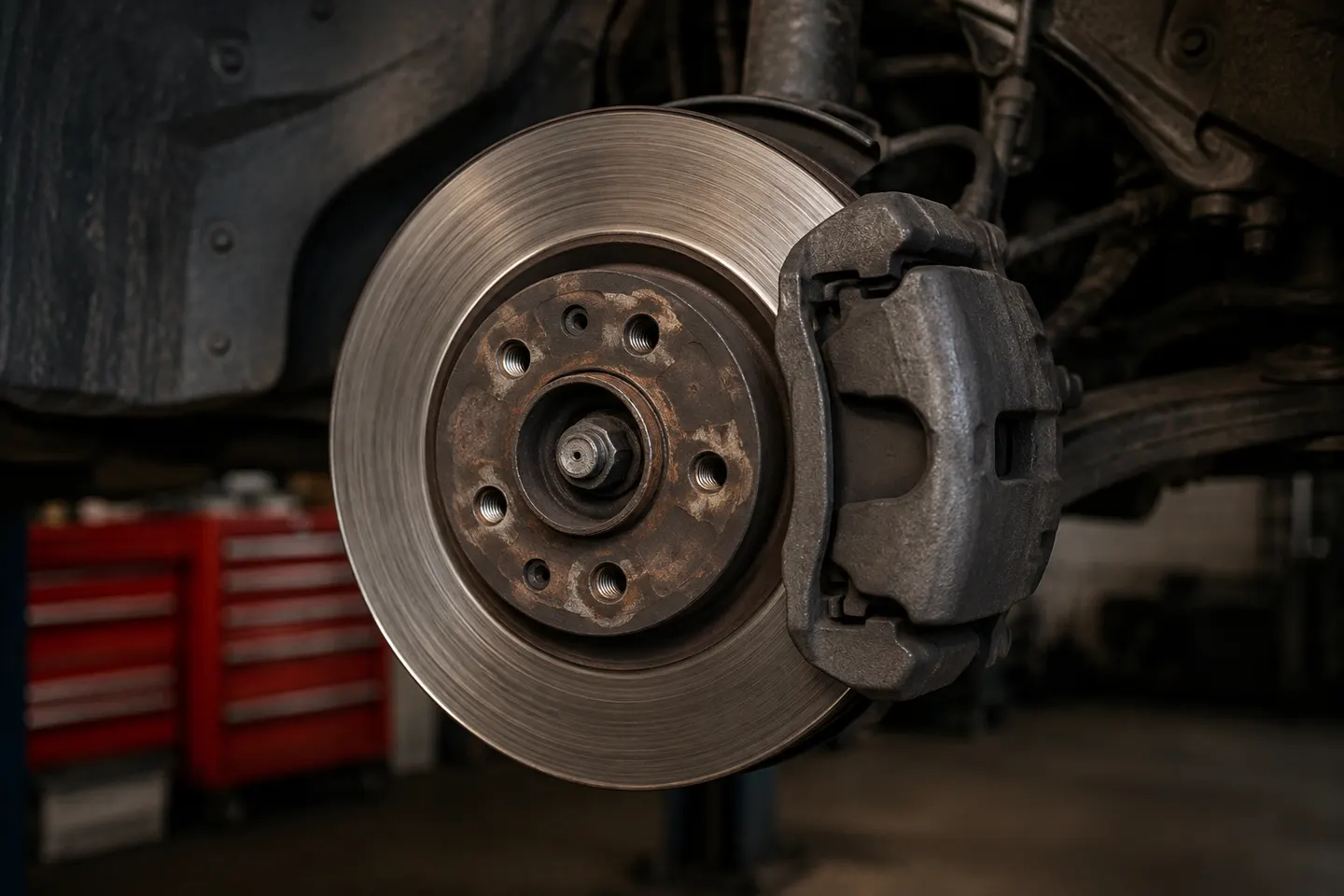 Illustrative image
What should you do after brake grinding starts?
Protect stopping control first, then preserve the pattern so inspection can distinguish friction damage from other wheel-area contact.
Get the vehicle to a safe state
Ease off speed and move out of traffic without making hard test stops. If the pedal, direction, or stopping response changes, park safely and use recovery rather than driving to a shop. Use gentle braking only to leave the active lane. A pedal that sinks or a vehicle that pulls can worsen during the next stop, so distance to a repair facility is not the right deciding factor.
Record what happened
Note whether grinding occurs only with pedal pressure, at low speed, after warm-up, while turning, or throughout wheel rotation. Record warning lights, pull, vibration, odor, or fluid spots. Distinguish a sound that begins with pedal pressure from one that follows wheel rotation. That difference helps separate friction contact from a shield, bearing, or debris concern.
Check only what is safe and allowed
From outside the vehicle, look for obvious smoke, a very hot wheel area, leakage, or a loose part without touching anything. Do not remove a wheel at the roadside or crawl underneath. Smoke or sharp heat from one wheel can indicate a dragging component. Do not approach or cool the assembly with water, and keep combustible material away from the area.
Choose tests that separate causes
A brake inspection can compare pads or shoes, rotors or drums, caliper or wheel-cylinder operation, hardware, hoses, shields, wheel bearings, and related suspension or tire conditions. Pad thickness, rotor or drum surface, caliper movement, hydraulic integrity, and hardware position show whether grinding came from wear, damage, or a part that remained applied.
Decide from the documented result
The repair may include friction parts, damaged surfaces, hardware, caliper or hydraulic work, a shield correction, or another wheel component. Each item should follow a visible or measured finding. Replacing friction material without explaining the damaged surface or uneven wear can leave noise and imbalance. Verification should include a stable pedal and controlled, straight stopping.
Why do brakes make a grinding sound?
Severely worn friction material can allow backing material to contact a rotor, while broken hardware, debris, a dragging brake, shield contact, or another wheel fault can make a similar harsh sound. If the grind happens before the pedal is touched, inspection should extend beyond the normal service brake. If it starts only as pressure builds, friction surfaces and hardware become more central.
How is the source of brake grinding confirmed?
Inspection locates the sound to a wheel and examines contact marks, friction thickness, rotor or drum surfaces, hardware position, caliper movement, leakage, and wheel-area looseness. Contact marks and wear patterns often reveal direction and duration. Comparing inner and outer friction material can also show whether a slide or caliper failed to release evenly.
What can sound like worn brake pads?
A bent dust shield, road debris, wheel bearing, tire damage, parking-brake hardware, axle joint, or suspension contact may scrape or grind even when pedal pressure is not the trigger. A wheel bearing or shield may change sound during a turn, while a dragging brake may create heat and odor. These differences help the repairer choose a safe inspection before disassembly.
Why should you avoid driving until the sound gets louder?
Grinding can quickly change friction surfaces and may accompany reduced braking. Waiting for a clearer symptom trades diagnostic certainty for more damage and less predictable stopping. Continued contact can remove material unevenly and erase wear clues that would have helped identify the original fault. Prompt inspection preserves those clues while the braking response is assessed on suitable equipment.
What should the brake estimate show?
Ask which wheel or axle is affected, what was measured, whether pads or shoes and rotors or drums need work, how calipers and hardware operate, and what explains any uneven wear. Photos can document damage, but measurements and functional checks explain why a component needs replacement. The estimate should distinguish damage found on the noisy side from paired work proposed to maintain balanced braking.
When is a short drive to the repair shop unsafe?
A sinking or unusually soft pedal, severe pull, fluid leak, smoke, overheating at a wheel, warning plus reduced response, or longer stopping distance means the car should be recovered. If the source cannot be identified without driving, wheel rotation on suitable equipment may be safer than a road test. The process should never rely on hard stops from speed to make the complaint obvious.
When does this require professional help or a safe stop?
Do not drive with grinding that is joined by weak stopping, a sinking pedal, a substantial pull, fluid leakage, smoke, or a wheel that becomes unusually hot. Move to a safe place and arrange recovery. Do not touch a hot brake, inhale dust, or test the complaint with hard stops on public roads.
 Illustrative image
Frequently asked questions
Can grinding brakes still stop the car?
They may still create some braking force, but that does not make continued use safe. Friction material can be severely worn, surfaces can be damaged, and performance may change without warning. Use current pedal and stopping behavior to choose a safe stop, then arrange inspection.
Does grinding mean I need new rotors?
Rotor damage is possible when hard material contacts the surface, but the sound alone cannot define replacement. The rotor or drum needs inspection and measurement, along with pads or shoes, caliper operation, hardware, and the source of any uneven wear.
Why does the grinding continue after I release the brake?
A dragging caliper, displaced hardware, shield contact, trapped debris, a bearing, or another rotating part may continue touching while the wheel turns. Stop if the wheel area heats, control changes, or the sound becomes severe, and arrange inspection. A rotating inspection can distinguish brake contact from bearing noise.
Can brake grinding start suddenly?
Yes. Friction wear may cross into metal contact, hardware can move, debris can enter, or a component can fail. A sudden onset should be treated seriously, especially with pedal, warning, pull, vibration, smoke, or stopping changes. Do not drive farther to see whether it clears.
What if the brakes grind only on the first stop?
Moisture or surface condition can sometimes produce a brief sound, but persistent or recurring grinding still needs context. Report how long it lasts and whether performance changes. Do not assume the first-stop pattern rules out wear or hardware damage. Inspection should still confirm usable friction material and hardware.
Key takeaways
- Grinding identifies harmful contact but cannot reveal pad thickness or rotor damage from the driver’s seat.
- A sinking pedal, pull, leak, smoke, or weak braking means the vehicle needs recovery.
- Inspection should compare friction surfaces, caliper movement, hardware, shields, bearings, and hydraulic integrity.
- The estimate should name the affected axle and explain every uneven wear or contact mark.
Sources and vehicle references
- Firestone: common brake problems
- Midas: soft and spongy brakes
- AAA: signs that brakes need inspection
- AAA: guide to auto repair
Use the owner’s manual and vehicle-specific service information for your exact model, engine and equipment.
This guide does not verify a current business service.
Use this page as general vehicle information. It does not establish that Collins Repair is currently operating or offers the related service.