Brake pads provide replaceable friction material, while rotors provide the rotating surfaces the pads clamp during braking. Pad wear does not automatically prove that rotors need replacement, and a rotor concern cannot be decided from appearance alone. Inspection, measurements, surface condition, vehicle specifications, and the original braking complaint define the repair scope.
- Approve pads, rotors, or both only after the inspection explains the condition of each friction component on the affected axle.
- Brake-pad work addresses worn or damaged friction material and related hardware. Rotor work addresses measured thickness, surface, runout, or damage within the vehicle-specific service limits.
- Useful evidence includes remaining friction condition, rotor measurements and surface findings, caliper and hardware operation, and pedal, noise, pull, and vibration history.
- Other causes worth checking are a sticking caliper, loose or damaged hardware, wheel or tire vibration, wheel-bearing movement, and a hydraulic problem. Their evidence must be weighed separately before the choice settles on brake pads or brake rotors.
- Base the choice on inspection of the complete brake corner, applicable specifications, and evidence tied to the driver complaint.
How do pad and rotor decisions differ?
Use the rows to see what each observation means for brake pads and brake rotors. The purpose is to connect the choice to a vehicle finding.
| Situation or question | Brake pads | Brake rotors |
|---|---|---|
| Pads are worn near their limit | Pad replacement is supported | Rotor condition still needs separate assessment |
| Rotor has scoring or heat damage | Pad contact may also be affected | Measure and compare with the approved repair limit |
| Pedal pulsation or vibration | Pads alone may not address the source | Rotor, hub, wheel, tire, and suspension factors may need checks |
| Uneven wear across pads | Caliper, slides, hardware, or hose may matter | Rotor replacement alone will not correct the cause |
| Grinding or reduced braking | Friction components may have severe damage | Stop driving and inspect the full system |
 Illustrative image
How should a pad-versus-rotor decision be made?
Follow this sequence to preserve evidence, test competing causes, and choose between brake pads and brake rotors.
Confirm the exact vehicle and system
Verify the VIN-based layout, equipment, and current technical procedure before comparing the options. Brake dimensions, wear limits, resurfacing permission, electronic parking-brake procedures, and fastener requirements differ by vehicle. This prevents a borrowed specification from misdirecting work on the axle and friction parts involved.
Document the history and operating pattern
Create a sequence of events that includes which axle seems noisy, pedal feel and stopping behavior, whether vibration changes with braking, and recent brake or wheel work. Attach any dated invoices, retained warnings, photos, or scan data that clarify the choice between brake pads and brake rotors. Compare the sequence with remaining friction condition.
Inspect friction material condition safely
Inspect friction material, rotor surfaces and edges, calipers, fluid leakage, hardware, tires, and wheels before changing the original condition. Measure the rotor and compare each brake corner with the vehicle procedure. Record uneven wear, heat, contamination, looseness, and any hydraulic concern separately.
Separate brake pads from brake rotors
Determine how the planned checks distinguish normal surface marks from disqualifying damage, rotor variation from tire or hub vibration, pad wear from a caliper fault, and friction noise from a hydraulic concern. Interpret the result in the context of persistent squeal, the exact system layout, and earlier repairs instead of treating it in isolation.
Match the work to the evidence
Choose brake pads when friction material condition and related hardware support replacement. Use brake rotors when measurement, damage, or the approved machining decision supports rotor work. If the evidence supports neither choice, investigate a sticking caliper and loose or damaged hardware instead of forcing it into either category.
Recheck pedal feel
After service or repair, check pedal feel, stopping response, noise, pull, warning status, and correct operation of the repaired axle under safe conditions. Record the applicable specification, findings for the axle and friction parts involved, and any condition that remains unverified.
What is the functional difference between pads and rotors?
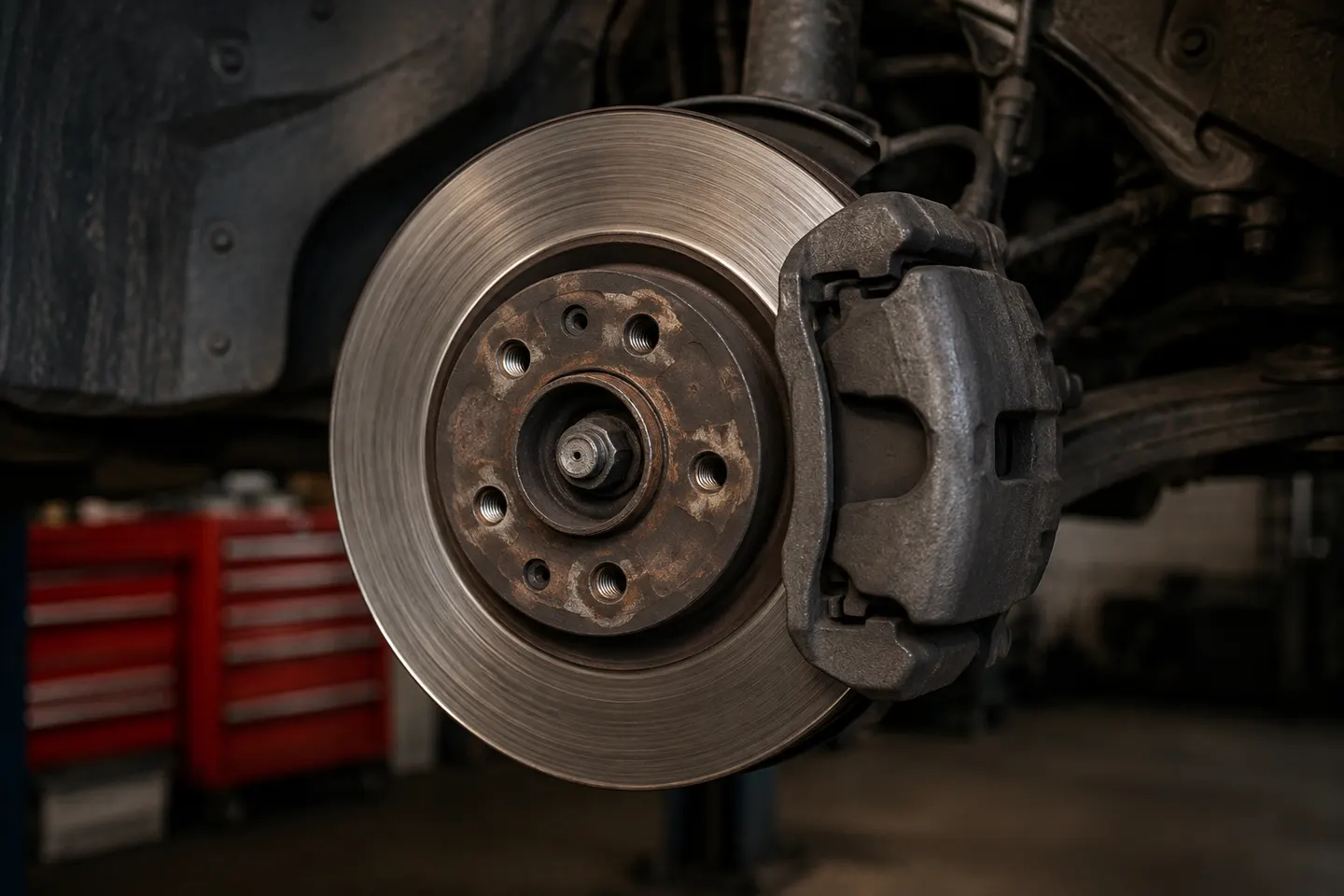
Pads and rotors work as a friction pair, but they are inspected and approved as separate components. The pad has wearable lining; the rotor must provide an acceptable surface and geometry within the vehicle specification. The condition of one can influence the other without making every repair scope identical. Base the next step on inspection of the complete brake corner, applicable specifications, and evidence tied to the driver complaint.
Do squealing, grinding, or vibration identify the needed brake parts?
Persistent squeal, grinding during braking, pedal or steering vibration, a pull while slowing, and changed pedal travel can justify comparing brake pads with brake rotors. Keep the relevant history with the complaint: Which axle seems noisy and pedal feel and stopping behavior. Noise can come from hardware or contact, while a soft pedal points toward a different hydraulic question.
Could a sticking caliper explain the same evidence?
A sticking caliper, loose or damaged hardware, wheel or tire vibration, wheel-bearing movement, and a hydraulic problem can overlap with the suspected cause. A wheel, tire, hub, bearing, suspension, or caliper problem may create vibration or uneven contact that new friction parts alone cannot solve. Document the evidence used to retain or reject a sticking caliper, including any access limit.
Why do brake measurements and service information matter?
Brake dimensions, wear limits, resurfacing permission, electronic parking-brake procedures, and fastener requirements differ by vehicle. Vehicle identification governs the specifications and steps used for brake pads versus brake rotors. If records are missing for rotor measurements and surface findings, treat that point as uncertain and base the decision on present evidence.
What belongs in a brake pad or rotor estimate?
Expect the written scope to address the axle and friction parts involved, rotor measurement or condition, hardware and caliper findings, fluid or parking-brake work if justified, and safe result checks. It should explain what supports the axle and friction parts involved. Any item requiring disassembly or a new test should have its own approval boundary.
When is replacing pads and rotors still incomplete?
The scope remains incomplete when uneven wear, a seized slide, leaking component, damaged hose, loose bearing, contaminated friction surface, or hydraulic symptom has not been explained. Afterward, check pedal feel, stopping response, noise, pull, warning status, and correct operation of the repaired axle under safe conditions. Any unresolved evidence related to persistent squeal still requires follow-up.
When does this require professional help or a safe stop?
Do not continue driving with reduced stopping power, a sinking pedal, substantial fluid loss, severe grinding, smoke, or a wheel that becomes unusually hot. Do not repeat a condition that could reduce control or cause damage; have the vehicle assessed safely.
 Illustrative image
Frequently asked questions
Does squealing or pedal vibration determine the needed brake work?
No. Noise and vibration establish a complaint, but pad thickness, wear pattern, rotor thickness and runout, surface condition, hardware, caliper movement, hub condition, tires, and suspension may change the conclusion. The estimate should follow measurements and inspection for the affected axle rather than assign pads or rotors from the symptom alone.
Can new brake pads be installed on old rotors?
That depends on measured rotor condition, surface, vehicle specifications, and the permitted service method. Age alone does not answer the question. Ask for rotor thickness, discard specification, runout, surface and heat findings, and whether machining or replacement is allowed. Those results should explain how the selected rotor surface will support the new pads.
Does brake vibration always mean the rotors are warped?
No. Rotor thickness variation or runout, hub condition, wheel installation, tires, bearings, and suspension can contribute. The vibration pattern and measurements at the affected corners should support the conclusion. Hub, mounting, wheel, and tire checks may point to a different repair, so rotors should not be named from pedal or steering-wheel feel alone.
Which brake measurements and service records should support the estimate?
Keep earlier pad and rotor invoices, mileage, wheel or suspension work, and any recorded thickness, runout, or wear findings. Describe whether the complaint occurs during light or hard braking, at speed, or through the pedal or steering wheel. Dated measurements let the customer compare the proposed axle scope with actual condition and prior work.
What pad and rotor findings should a brake estimate document?
The proposal should identify pad condition on both sides, rotor measurements and surface findings, caliper and hardware observations, and the permitted service method for that vehicle. It should explain any axle-based replacement decision and separate bearings, tires, suspension, or hydraulic work unless those items have their own supporting evidence.
Key takeaways
- Compare remaining friction condition with rotor measurements and surface findings; together they support the brake pads versus brake rotors decision.
- The case for brake pads is stronger when friction material condition and related hardware support replacement.
- The case for brake rotors is stronger when measurement, damage, or the approved machining decision supports rotor work.
- Rule out a sticking caliper, loose or damaged hardware, and wheel or tire vibration. Confirm the outcome through pedal feel, stopping response, noise, pull, warning status, and correct operation of the repaired axle under safe conditions.
Sources and vehicle references
Use the owner’s manual and vehicle-specific service information for your exact model, engine and equipment.
This guide does not verify a current business service.
Use this page as general vehicle information. It does not establish that Collins Repair is currently operating or offers the related service.