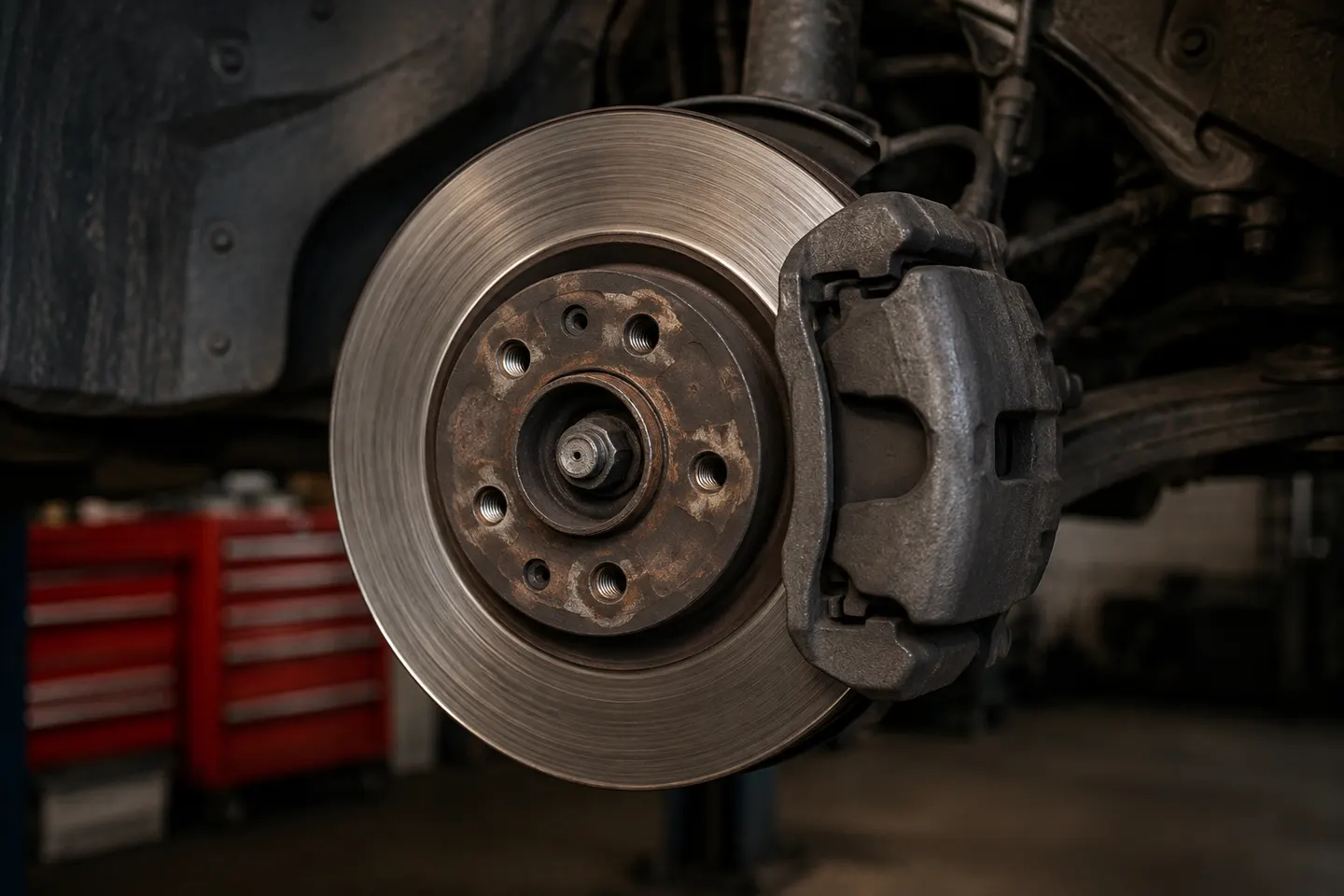
- First describe when the noise, looseness, bounce, pull, or tire wear occurs; then locate the movement or measured condition that supports repair.
- Give the shop the sequence and available records for road or steering conditions, recent impact, tire or alignment work, and load or ride-height changes.
- The same report should account for tire damage or pressure differences, loose brake hardware, wheel bearing concerns, body or exhaust contact, and alignment without damaged parts before naming a failed part.
- Ask the estimate to spell out the damaged parts, required hardware, tire effects, alignment needs, and a control check and any approval boundary.
- Before closing the file, check noise, free play, ride response, steering return, tire clearance, and geometry affected by the repair, and save the supporting measurements.
What can redirect the suspension and steering repair evaluation?
For suspension and steering repair, these examples show how one complaint can lead to maintenance, diagnosis, a defined repair, or further observation.
| Finding or situation | What it can mean | Useful next step |
|---|---|---|
| Clunk over a bump | Joint, bushing, mount, or contact may exist | Locate movement and witness marks |
| Loose or wandering feel | Steering, suspension, tires, or alignment may contribute | Inspect the full control path |
| Repeated bouncing | Dampers or springs may need assessment | Compare ride response and physical condition |
| Pulling | Tires, brakes, road crown, or geometry can matter | Check simple causes before alignment conclusions |
| Uneven tire wear | Pressure, rotation, worn parts, or geometry may be involved | Inspect tires and suspension together |
How should suspension and steering repair be evaluated?
Begin by locating clunks over bumps within the vehicle's actual system design. Use that connection to order the inspection and measurement work.
Describe clunks over bumps
Describe the noise, looseness, bounce, pull, or tire-wear pattern and the road, steering, load, or speed conditions that produce it. Include recent impacts, tire or alignment work, and ride-height changes. Do not deliberately recreate a condition that makes steering or wheel control uncertain.
Confirm the exact vehicle configuration
Confirm the VIN-based configuration, fitted components, and governing instructions. Independent, solid-axle, air, adaptive, and conventional spring designs use different joints, controls, and setup procedures. That information controls the test for free play and loaded movement and the requirements surrounding the damaged parts.
Inspect before changing the original condition
Survey tires and wheels, ball joints, tie rods, and bushings, springs, dampers, and mounts, wheel bearings and brakes, and alignment and structural clues without first wiping away physical evidence or clearing useful data. Record what the review of tires and wheels shows and how that finding relates to the reported pattern.
Separate tire damage or pressure differences from loose brake hardware
Check free play under the correct loaded conditions, locate noise and witness marks, assess ride height and damage, and evaluate steering operation. Measure alignment only after tires, wheels, bearings, brakes, steering joints, and suspension parts are known to be suitable for measurement.
Approve the scope and define verification
The work order should name each damaged part, required hardware, tire effect, and any alignment or calibration need supported by inspection. Findings that require disassembly or additional measurement need a separate authorization point. After repair, confirm free play, ride response, steering return, tire clearance, and affected geometry.
Which findings can support suspension and steering repair?
Reported clues may include clunks over bumps, loose steering, excessive bounce, pulling, and uneven tire wear. Note the onset and operating context for clunks over bumps, along with any recent change in road or steering conditions. A sound can travel through the body, and tire behavior can imitate a suspension or steering fault.
What should be checked before the scope is set?
Evaluate tires and wheels, ball joints, tie rods, and bushings, springs, dampers, and mounts, wheel bearings and brakes, and alignment and structural clues in a sequence that protects source evidence. Before naming tire damage or pressure differences as the cause, show how the observed path and test results support it.
What else can explain clunks over bumps?
Competing causes include tire damage or pressure differences, loose brake hardware, wheel bearing concerns, body or exhaust contact, and alignment without damaged parts. Brake, wheel, tire, bearing, exhaust, or body contact should be considered when the observed evidence points outside the suspension. The diagnosis should describe the evidence for or against tire damage or pressure differences, not simply omit it from the estimate.
What should the written estimate identify?
List each confirmed suspension or steering part, the observation or measurement supporting it, required hardware, tire effects, and any alignment or calibration work. Keep access-dependent findings outside the approved total until they can be documented and separately authorized.
What can remain unresolved after suspension and steering repair?
Alignment alone cannot tighten a loose joint, repair a damaged tire, restore a failed damper, or straighten a bent component. Persistent clunks over bumps means the evidence deserves reassessment. Compare prior results for free play and loaded movement with tire damage or pressure differences and loose brake hardware before changing direction.
How should the original concern be rechecked?
After the approved repair, confirm that free play and abnormal noise are resolved, steering returns predictably, ride response is controlled, tires clear surrounding parts, and affected geometry is within the applicable specification. Record any condition that could not be reproduced.
When should the vehicle stop being driven?
Stop driving if a wheel changes position, steering binds or separates from normal response, a tire contacts the body, or a component is visibly loose. Do not inspect beneath an unsupported vehicle, handle a loaded spring, or place hands near a moving wheel. Have severe looseness, binding, rubbing, or impact damage assessed before further driving.
 Illustrative image
Frequently asked questions
Can a clunk, pull, or worn tire identify the failed suspension part?
No. Tires, wheels, brakes, bearings, body or exhaust contact, steering joints, and alignment can create related symptoms. Locate movement or witness marks, test free play under the correct conditions, and connect the finding to the specific part before authorizing repair.
Is ordering an alignment enough for every pull or uneven tire?
No. Alignment changes wheel geometry, but it cannot repair a damaged tire, brake drag, a loose steering or suspension joint, a failed damper, or a bent component. Inspect those conditions first, then measure geometry and verify the original handling or wear concern after supported repairs.
Which road conditions and recent impacts help trace a clunk or pull?
Describe the bump, turn, braking, speed, load, or road condition that produces the noise or steering change. Include recent impacts, tire work, alignment, parts replacement, ride-height changes, and wear patterns. This history helps connect movement or witness marks to a joint, damper, spring, tire, brake, bearing, or contact point.
Should each proposed part have its own measured finding?
Yes. The work order should identify each damaged suspension or steering part and the observation, movement, or measurement supporting it. Required hardware, tire effects, alignment, and calibration should be explicit. Findings revealed only after disassembly need a separate authorization before they are added to the approved repair.
How do I arrange an inspection after an impact or sudden steering change?
Contact Collins Repair with the vehicle identification, recent impact or repair history, and the exact looseness, noise, pull, bounce, or tire concern. Ask whether a complete steering and suspension inspection is currently available. Confirm appointment timing and arrival instructions, and discuss transport when a wheel shifts, steering binds, or a tire rubs.
Key takeaways
- Describe exactly when the noise, looseness, bounce, pull, or tire wear appears.
- Inspect tires, wheels, brakes, bearings, steering joints, suspension parts, and contact marks before naming a failed component.
- Authorize each part from a documented observation or measurement, with separate approval for later discoveries.
- Confirm free play, noise, ride response, steering return, tire clearance, and affected geometry after repair.
- Contact Collins Repair to verify current suspension and steering repair scheduling before the visit.
Sources and vehicle references
Use the owner’s manual and vehicle-specific service information for your exact model, engine and equipment.
Confirm before making plans.
Current Collins Repair operations and this service have not been independently verified. Use the published phone or email to ask whether the business is operating, whether the service is available for your vehicle and where the vehicle should arrive.